Author name: Jason Lohr

Court of Appeal confirms no relief for late labor commissioner appeals, even due to clerk rejection: Dobarro v. Kim

In Dobarro v. Kim (2025) 116 Cal.App.5th 158, the Court of Appeal held that the tolling provisions for electronic filing failures (Code Civ. Proc. § 1010.6) do not apply to the strict jurisdictional deadline for appealing a Labor Commissioner award (Labor Code § 98.2). Affirming the dismissal of an appeal filed one day late after a clerk rejected a timely attempted e-filing, the court relied on Pressler v. Donald L. Bren Co. (1982) 32 Cal.3d 831 to maintain that the deadline is mandatory and cannot be extended for mistake or neglect.

This decision reinforces the unforgiving nature of § 98.2 appeals, warning counsel that technical glitches or clerk rejections offer no relief from this specific jurisdictional bar.

Court of Appeal confirms no relief for late labor commissioner appeals, even due to clerk rejection: Dobarro v. Kim Read More

Court of Appeal holds “flag bonus” pay plan did not violate “no borrowing” rule: Mora v. C.E. Enterprises

In Mora v. C.E. Enterprises (2025) 116 Cal.App.5th 72, the Court of Appeal held that a pay plan providing a high base hourly wage (double the minimum) plus a “flag bonus” did not violate the “no borrowing” rule from Gonzalez v. Downtown LA Motors, LP, nor Labor Code § 226.2. Affirming a judgment for the employer, the court distinguished this “base plus bonus” model from unlawful piece-rate averaging, reasoning that because employees were paid well above minimum wage for every hour worked (productive or not), the bonus was a true incentive and not used to cover unpaid time.

This decision validates “flag bonus” structures for automotive technicians and other trades, provided the base hourly rate independently satisfies minimum wage obligations for all hours on the clock, and serves as a reminder that plaintiffs cannot rely on “manifestly deficient” records to overturn PAGA verdicts.

Court of Appeal holds “flag bonus” pay plan did not violate “no borrowing” rule: Mora v. C.E. Enterprises Read More

Court of Appeal clarifies payment for liquidated damages and apprentice ratios in prevailing wage case: Anton’s Services v. Hagen

In Anton’s Services v. Hagen (2025) 116 Cal.App.5th 90, the Court of Appeal held that funds withheld by an awarding body (Lab. Code § 1727(b)) do not constitute the “payment of wages” necessary to avoid liquidated damages under § 1742.1. Affirming penalties against a public works contractor, the court ruled that because withheld funds are not actually received by workers until final review, they cannot be used to demonstrate that unpaid wages were “promptly and voluntarily corrected.” Additionally, the court affirmed that overtime and weekend shifts must be included when calculating compliance with required apprentice-to-journeyman ratios under § 1777.5.

This decision prevents contractors from using agency withholdings as a shield against liquidated damages and enforces stricter compliance with apprenticeship staffing ratios across all working hours.

Court of Appeal clarifies payment for liquidated damages and apprentice ratios in prevailing wage case: Anton’s Services v. Hagen Read More

Ninth Circuit holds FLSA retaliation claim valid against non-employer acting in employer’s interest: Hollis v. R&R Restaurants, Inc.

In Hollis v. R&R Restaurants, Inc. (9th Cir. 2025) 159 F.4th 677, the Ninth Circuit held that an FLSA retaliation defendant need not be the plaintiff’s direct employer, provided they acted “indirectly in the interest of” the employer (29 U.S.C. § 203(d)). Reversing summary judgment, the court found that a manager of a separate club could be liable for cancelling a dancer’s performances in retaliation for their wage lawsuit against a different club, and explicitly rejected the argument that “minimizing legal liability” is a legitimate business justification for such adverse action.

This decision affirms that FLSA retaliation liability extends to third parties and managers who act against workers for protected activity at related entities, and explicitly forecloses “minimizing legal liability” as a legitimate business justification for adverse actions.

Ninth Circuit holds FLSA retaliation claim valid against non-employer acting in employer’s interest: Hollis v. R&R Restaurants, Inc. Read More

Court of Appeal holds imputed service years in disability pension calculation does not constitute FEHA age discrimination: Carroll v. City and County of San Francisco

In Carroll v. City and County of San Francisco (2025) 115 Cal.App.5th 1192, the Court of Appeal held that a public pension plan’s use of imputed service years to calculate disability benefits was motivated by pension status (years of credited service), not age, and therefore did not constitute age discrimination under FEHA. Affirming a judgment for the city, the court relied on Kentucky Retirement Systems v. EEOC (2008) 554 U.S. 135 to rule that the plan’s terms were facially neutral.

This decision confirms that pension formulas tied to service eligibility are generally lawful under FEHA, even if they correlate with age, and applies the federal Kentucky Retirement Systems standard to California state law claims.

Court of Appeal holds imputed service years in disability pension calculation does not constitute FEHA age discrimination: Carroll v. City and County of San Francisco Read More

Court of Appeal clarifies substantive unconscionability analysis for arbitration agreements: Gurganus v. IGS Solutions LLC

In Gurganus v. IGS Solutions LLC (2025) 115 Cal.App.5th 327, the Court of Appeal held an arbitration agreement was substantively unconscionable because it included “expansive” nonmutual carve-outs for employer claims and, when read with a concurrently signed confidentiality agreement, also prevented informal witness discovery. Affirming the denial of the motion to compel, the court held that because these multiple unconscionable provisions permeated the agreement, the trial court did not abuse its discretion by refusing to sever them.

This decision confirms that courts will analyze all contemporaneously signed employment documents as a single contract and solidifies that a provision barring informal witness discovery is a key unconscionable term that can help void an entire agreement.

Court of Appeal clarifies substantive unconscionability analysis for arbitration agreements: Gurganus v. IGS Solutions LLC Read More

Court of Appeal holds pre-2024 PAGA plaintiff’s “aggrieved employee” status not subject to arbitration: Galarsa v. Dolgen California

In Galarsa v. Dolgen California (2025) 115 Cal.App.5th 1, the Court of Appeal held that the threshold question of a PAGA plaintiff’s “aggrieved employee” standing is not an arbitrable dispute subject to a private arbitration agreement. Affirming the denial of a motion to compel, the court also ruled that a “headless” PAGA action (alleging violations suffered only by other employees) is permissible under pre-2024 law. The court reasoned that standing to sue on behalf of the state is a dispute between the LWDA and the employer, not the individual employee and employer.

This decision provides an avenue for plaintiffs litigating pre-2024 PAGA claims to avoid arbitration on the gateway issue of standing, preventing employers from securing a preclusive finding in the arbitral forum that could kill the representative court action.

Court of Appeal holds pre-2024 PAGA plaintiff’s “aggrieved employee” status not subject to arbitration: Galarsa v. Dolgen California Read More

Ninth Circuit upholds COVID-19 vaccine mandate against § 1983 and 14th Amendment challenges: Curtis v. Inslee

In Curtis v. Inslee (9th Cir. 2025) 154 F.4th 678, the Ninth Circuit affirmed the dismissal of §1983 and 14th Amendment challenges to a COVID-19 vaccine mandate, issuing two key holdings. First, the court held that federal statutes governing “investigational drugs” (like the FDCA and PREP Act) do not create a private right of action enforceable under §1983. Second, it held the mandate did not violate the 14th Amendment, ruling that at-will employment is not a protected property interest (barring the procedural due process claim) and that public health concerns easily satisfy rational basis review under Jacobson v. Massachusetts (1905) 197 U.S. 11 (barring the substantive due process claim).

This decision reinforces the high bar for constitutional challenges to public health mandates and confirms that the emergency status of a vaccine does not provide employees with a private right to sue under federal drug laws.

Ninth Circuit upholds COVID-19 vaccine mandate against § 1983 and 14th Amendment challenges: Curtis v. Inslee Read More

Court of Appeal clarifies “clear and unmistakable” standard for arbitrability delegation: Villalobos v. Maersk, Inc.

In Villalobos v. Maersk, Inc. (2025) 114 Cal.App.5th 1170, the Court of Appeal held that generally incorporating AAA rules by reference does not meet the “clear and unmistakable” standard to delegate arbitrability if the employee would need a three-step process to find the actual delegation clause. The court also affirmed that when the California Arbitration Act (CAA) governs (not the FAA), Labor Code § 229 bars arbitration of waiting time penalty claims (Lab. Code § 203), and Viking River‘s preemption does not apply, rendering the entire PAGA claim non-arbitrable.

This decision reinforces that vague incorporation is insufficient notice for delegation and confirms that § 229 remains a powerful tool to keep wage and PAGA claims in court when the CAA applies.

Court of Appeal clarifies “clear and unmistakable” standard for arbitrability delegation: Villalobos v. Maersk, Inc. Read More

Court of Appeal clarifies limits on fee shifting for late arbitration payments post-Hohenshelt: Wilson v. Tap Worldwide, LLC

In Wilson v. Tap Worldwide, LLC (2025) 114 Cal.App.5th 1077, the Court of Appeal reversed an attorney’s fee award, holding that a defendant’s arbitration fee payment arriving one business day late does not constitute “abandonment” under Code of Civil Procedure § 1281.98. Applying the new standard from Hohenshelt v. Superior Court (2025) 18 Cal.5th 310, the court held that abandonment (and its fee-shifting remedy) requires the payment lapse to be “willful, grossly negligent, or fraudulent.”

This decision is one of the first to apply Hohenshelt, confirming that the statute’s severe penalties are no longer available for minor, non-willful payment errors and effectively ending “gotcha” motions to vacate arbitration based on technical payment timing issues.

Court of Appeal clarifies limits on fee shifting for late arbitration payments post-Hohenshelt: Wilson v. Tap Worldwide, LLC Read More

Ninth Circuit holds denial of job opening notice satisfies prima facie age discrimination burden: Caldrone v. Circle K Stores Inc.

In Caldrone v. Circle K Stores Inc. (9th Cir. 2025) 114 Cal.App.5th 949, the Ninth Circuit reversed summary judgment on an ADEA/FEHA claim, issuing two key clarifications on the plaintiff’s prima facie burden. First, it held that an employer’s failure to notify existing employees of a job opening can satisfy the “application” element, citing Reed v. Lockheed Aircraft Corp. (1980) 613 F.2d 757, 761. Second, it held that while ten years is a “presumptive threshold” for a substantial age difference under the ADEA, this presumption is rebuttable, and the 9.3-year gap in this case was sufficient to proceed.

This decision lowers the prima facie burden for age discrimination plaintiffs, confirming they can proceed without a formal application if openings are kept secret and that an age gap just under ten years is not automatically fatal to their claim.

Ninth Circuit holds denial of job opening notice satisfies prima facie age discrimination burden: Caldrone v. Circle K Stores Inc. Read More

Court of Appeal holds charter cities exempt from public healthcare worker rest break protections: Levy v. City and County of San Francisco

In Levy v. City and County of San Francisco (2025) 114 Cal.App.5th 997, the Court of Appeal held that Labor Code § 512.1’s meal and rest break protections for public healthcare workers do not apply to charter cities. Affirming a demurrer, the court ruled that the statute’s text (e.g., “counties,” “municipalities”) does not explicitly include charter cities, and the Legislature’s failure to do so (unlike in other statutes like § 1182.14 or § 555) shows no intent to override the “home rule” doctrine.

This decision solidifies the autonomy of charter cities over their labor relations, confirming they are not bound by § 512.1 and that their MOUs control healthcare worker break policies.

Court of Appeal holds charter cities exempt from public healthcare worker rest break protections: Levy v. City and County of San Francisco Read More

Ninth Circuit vacates fee award in mixed-success Section 998 settlement due to unclear Hensley explanation: Alvarado v. Wal-Mart Associates Inc.

In Alvarado v. Wal-Mart Associates Inc. (9th Cir. 2025) 156 F.4th 917, the Ninth Circuit held that a Code of Civil Procedure § 998 offer allowing fees for “individual claims” does not implicitly waive the plaintiff’s right to recover fees for “inextricably intertwined” PAGA or class claims, and any such waiver must be express. However, the court vacated the $300,000 fee award because the district court’s Hensley v. Eckerhart (1983) 461 U.S. 424 analysis was unclear and contradictory, failing to provide the reasoned explanation required by Moreno v. City of Sacramento (9th Cir. 2008) 534 F.3d 1106.

This decision warns defense counsel to be explicit about fee exclusions in § 998 offers and reminds trial courts that they must clearly articulate their Hensley calculations to survive appeal.

Ninth Circuit vacates fee award in mixed-success Section 998 settlement due to unclear Hensley explanation: Alvarado v. Wal-Mart Associates Inc. Read More

Ninth Circuit clarifies religious vs. secular distinction for Title VII accommodation claims: Detwiler v. Mid-Columbia Medical Center

In Detwiler v. Mid-Columbia Medical Center, (9th Cir. 2025) 156 F.4th 886, the Ninth Circuit held that a Title VII religious accommodation claim fails if the employee’s objection is based on a “secular judgment” rather than a “truly religious principle.” The court affirmed the dismissal of a Christian employee’s claim, finding her objection to COVID-19 testing was based on her personal, secular belief that the swabs were carcinogenic. The court ruled that her broad reference to a “Christian duty” to treat her body as a “temple of God” was insufficient to “elevate [that] personal medical judgment… to the level of religious significance.”

This decision creates a circuit split by explicitly rejecting the more “lenient” standard used by the Sixth, Seventh, and Eighth Circuits, thereby adopting a more stringent test that makes it harder for plaintiffs to plead religious accommodation claims in the Ninth Circuit.

Ninth Circuit clarifies religious vs. secular distinction for Title VII accommodation claims: Detwiler v. Mid-Columbia Medical Center Read More

Court of Appeal clarifies criteria for lodestar multipliers in FEHA litigation: Bronshteyn v. Dept. of Consumer Affairs

In Bronshteyn v. Dept. of Consumer Affairs (2025) 114 Cal.App.5th 537, the Court of Appeal affirmed a $4.9 million FEHA attorney fee award, holding that a trial court has broad discretion to credit a plaintiff’s fee expert over a defendant’s and set high hourly rates based on its personal observation of counsel’s skill. The court also confirmed that lodestar multipliers can be applied to post-judgment work, including fee litigation.

This decision reinforces a trial court’s wide latitude in calculating and awarding attorney’s fees under FEHA and serves as a warning that defendants who fail to provide robust counter-evidence (like their own attorneys’ hours) will struggle to challenge an award on appeal.

Court of Appeal clarifies criteria for lodestar multipliers in FEHA litigation: Bronshteyn v. Dept. of Consumer Affairs Read More

Court of Appeal sanctions attorney for relying on AI to fabricate legal authority: Noland v. Land of the Free, L.P.

In Noland v. Land of the Free, L.P. (2025) 114 Cal.App.5th 426, the Court of Appeal affirmed summary judgment for a defendant and imposed $10,000 in sanctions on plaintiff’s counsel for submitting briefs where “nearly all of the quotations… [had] been fabricated” using generative AI. The court rejected counsel’s defense of ignorance about AI’s propensity to “hallucinate,” holding that relying on fabricated authority is sanctionable and that attorneys cannot delegate their fundamental duty of cite-checking.

This decision serves as a stark warning to the bar, confirming that an appeal based on AI-generated, non-existent legal authority is frivolous and that ignorance of the technology’s flaws is no defense.

Court of Appeal sanctions attorney for relying on AI to fabricate legal authority: Noland v. Land of the Free, L.P. Read More

Court of Appeal holds employer response to off-site harassment may create hostile work environment: Kruitbosch v. Bakersfield Recovery Services, Inc.

In Kruitbosch v. Bakersfield Recovery Services, Inc. (2025) 114 Cal.App.5th 200, the Court of Appeal held that an employer’s response to a complaint can independently create a hostile work environment, even if the underlying harassment was not work-related. The court found the coworker’s off-site harassing conduct was not sufficiently work-related to be actionable under FEHA. However, it reversed the dismissal of the HWE claim, holding that the HR representative’s mocking response to the plaintiff’s complaint was a work-related event that could create a hostile environment, following Fuller v. Idaho Department of Corrections (9th Cir. 2017) 865 F.3d 1154.

This decision confirms that while employers may not have a duty to remedy purely private conduct, they have a separate duty not to create a hostile environment in their response to an employee’s complaint about that conduct.

Court of Appeal holds employer response to off-site harassment may create hostile work environment: Kruitbosch v. Bakersfield Recovery Services, Inc. Read More

Court of Appeal clarifies “regular compensation” under CERL: Baker v. San Mateo County Employees Retirement Assn.

In Baker v. San Mateo County Employees Retirement Assn. (2025) 114 Cal.App.5th 81, the Court of Appeal held that “regular compensation” under CERL (Gov. Code § 31724) refers to an employee’s regular salary or full wages, not the pay tied to a specific job position. The court affirmed a disability retirement effective date based on the employee’s return to a different job that paid the same rate, following Katosh v. Sonoma County Employees’ Retirement Association (2008) 163 Cal. App.4th 56.

This decision clarifies that the statutory clock for disability retirement calculations is triggered by the employee’s pay rate, preventing employees from challenging their retirement date simply because they were reassigned to a different role with equal pay.

Court of Appeal clarifies “regular compensation” under CERL: Baker v. San Mateo County Employees Retirement Assn. Read More

Ninth Circuit clarifies Title VII statute of limitations in agency-caused delay cases: Asuncion v. Hegseth

In Asuncion v. Hegseth (9th Cir. 2025) 150 F.4th 1252, the Ninth Circuit held that the 90-day statute of limitations for a Title VII / Rehabilitation Act claim does not begin to run until the plaintiff “could realistically be held responsible for having access” to the agency’s final decision. The court reversed the dismissal of a complaint filed 88 days after the plaintiff received the notice via email (but 115 days after the agency filed it), because the agency’s own technical error prevented access. Alternatively, the court held the agency’s error was an “extraordinary circumstance” justifying equitable tolling. This decision provides important protection for plaintiffs, ensuring their claims are not barred by an agency’s technological failures in providing the final notice.

Ninth Circuit clarifies Title VII statute of limitations in agency-caused delay cases: Asuncion v. Hegseth Read More

Ninth Circuit clarifies undue hardship defence in context of COVID-19 vaccine mandate: Petersen v. Snohomish Regional Fire and Rescue

In Petersen v. Snohomish Regional Fire and Rescue (9th Cir. 2025) 150 F.4th 1211, the Ninth Circuit affirmed that accommodating unvaccinated firefighters with public-facing EMT duties would impose an undue hardship under Title VII. Applying the “substantial” burden standard from Groff v. DeJoy (2023) 600 U.S. 447, 468, the court held that an undue hardship analysis may be based on a realistic risk of hardship, not just on actual costs incurred. The court found that undisputed expert testimony on health, safety, and operational risks during the Delta/Omicron spikes met this substantial burden.

This decision provides critical post-Groff guidance for vaccine mandate cases, confirming that employers can meet the heightened undue hardship standard by demonstrating a realistic risk to public safety.

Ninth Circuit clarifies undue hardship defence in context of COVID-19 vaccine mandate: Petersen v. Snohomish Regional Fire and Rescue Read More

California Supreme Court clarifies good faith defense for minimum wage claims and scope of Berman appeals: Iloff v. LaPaille

In Iloff v. LaPaille (2025) 18 Cal. 5th 551, the California Supreme Court unanimously held that an employer’s mere ignorance of the law is not a “good faith” defense to liquidated damages for minimum wage violations. Modeling the defense on its FLSA counterpart, the Court ruled the employer must show they made an “attempt to determine what the law required” (e.g., investigating compliance). The Court also held that a de novo Berman appeal (Lab. Code § 98.2) allows trial courts discretion to hear new claims not raised before the Labor Commissioner, such as a Paid Sick Leave claim.

This decision requires employers to prove affirmative steps toward compliance to avoid liquidated damages and confirms the broad, de novo scope of Berman appeals, preventing them from being limited only to claims vetted by the Commissioner.

California Supreme Court clarifies good faith defense for minimum wage claims and scope of Berman appeals: Iloff v. LaPaille Read More

Ninth Circuit holds medical residency ranking excluded from Age Act’s scope: Spatz v. Regents of the University of California

In Spatz v. Regents of the University of California (9th Cir. 2025) 151 F.4th 1068, the Ninth Circuit held that a university’s medical residency ranking process is an “employment practice” and is therefore expressly excluded from the scope of the federal Age Act (42 U.S.C. § 6103 (c)(1)). The court affirmed summary judgment against an applicant alleging age discrimination, reasoning that because medical residency is a form of employment, the selection process falls squarely within the Act’s “employment practice” carve-out.

This decision confirms that the federal Age Act offers no protection against age discrimination in the medical residency selection process.

Ninth Circuit holds medical residency ranking excluded from Age Act’s scope: Spatz v. Regents of the University of California Read More

Ninth Circuit clarifies LMRA Section 301 exhaustion: Renteria-Hinojosa v. Sunsweet Growers, Inc.

In Renteria-Hinojosa v. Sunsweet Growers, Inc. (9th Cir. 2025) 150 F.4th 1076, the Ninth Circuit held that the requirement to exhaust CBA grievance procedures for an LMRA § 301 claim is not jurisdictional, and therefore a district court’s subsequent discretionary remand of supplemental state law claims is appealable. On the merits, the court affirmed the remand, finding the plaintiff’s state wage and PAGA claims were not preempted under the test from Alaska Airlines Inc. v. Schurke (9th Cir. 2018) (en banc) 898 F.3d 904, 920–21, as they did not require interpretation of the CBA’s substantive provisions.

This decision confirms appellate jurisdiction over these specific remand orders and reinforces the high bar for § 301 preemption of California wage claims.

Ninth Circuit clarifies LMRA Section 301 exhaustion: Renteria-Hinojosa v. Sunsweet Growers, Inc. Read More

Ninth Circuit affirms hybrid pay plan’s safe harbor, clarifies “off-the-clock” knowledge standard: Williams v. J.B. Hunt Transport, Inc.

In Williams v. J.B. Hunt Transport, Inc. (9th Cir. 2025) 151 F.4th 1020, the Ninth Circuit affirmed summary judgment for an employer, holding that its hybrid pay plan qualified for the Labor Code § 226.2 (a)(7) safe harbor because it paid minimum wage in addition to piece-rate pay, not by “borrowing” from it. The court also held that an employer’s mere access to log-in/log-out times does not, by itself, constitute constructive knowledge of off-the-clock work.

This decision validates hybrid pay structures under § 226.2 and shields employers from constructive knowledge claims based solely on their access to electronic time records.

Ninth Circuit affirms hybrid pay plan’s safe harbor, clarifies “off-the-clock” knowledge standard: Williams v. J.B. Hunt Transport, Inc. Read More

Court of Appeal rejects litigation risk as sole justification for facially discriminatory UC student hiring policy: Munoz v. The Regents of the University of California

In Munoz v. The Regents of the University of California (2025) 113 Cal.App.5th 466, the Court of Appeal held that the UC’s policy barring the hiring of students without federal work authorization is facially discriminatory under FEHA, finding that “lack of work authorization” is not materially distinct from protected “immigration status” (Cal. Code Regs., tit. 2, § 11028 (f)(3)). The court then held that an employer’s “litigation risk” is not, by itself, a sufficient justification for the discriminatory policy.

This decision prevents employers from using speculative litigation fears as a defense to discrimination, forcing them to instead demonstrate that the policy is actually required by federal law or “reasonably necessary” for business operations.

Court of Appeal rejects litigation risk as sole justification for facially discriminatory UC student hiring policy: Munoz v. The Regents of the University of California Read More

Ninth Circuit expands ministerial exception to customer service representative for religious organization: McMahon v. World Vision, Inc.

In McMahon v. World Vision, Inc. (9th Cir. 2025) 147 F.4th 959, the Ninth Circuit held that the ministerial exception barred the Title VII discrimination claims of a customer service representative (CSR) terminated for being in a same-sex marriage. Applying the functional test from Our Lady of Guadalupe Sch. v. Morrissey-Berru (2020) 591 U.S. 732, the court found the CSR performed “vital religious duties” central to the organization’s mission, even if her duties were preponderantly secular.

This decision expands the ministerial exception’s reach into roles traditionally viewed as secular, confirming that employees whose jobs are deemed central to a religious organization’s “core mission” can be barred from bringing discrimination claims.

Ninth Circuit expands ministerial exception to customer service representative for religious organization: McMahon v. World Vision, Inc. Read More

Court of Appeal clarifies “exempt employees” under Lab. Code § 246(l)(3): Hirdman v. Charter Communications, LLC

In Hirdman v. Charter Communications, LLC (2025) 113 Cal.App.5th 376, the Court of Appeal held the term “exempt employees” in Labor Code § 246 (l)(3) (a paid sick leave calculation method) is unambiguous and includes all exempt categories, such as outside salespersons, not just A/E/P employees.

This decision confirms the broad, plain-meaning scope of this calculation method and serves as a strong reminder that when statutory text is clear, courts will reject attempts to narrow it using extrinsic evidence like legislative history or informal DLSE opinion letters.

Court of Appeal clarifies “exempt employees” under Lab. Code § 246(l)(3): Hirdman v. Charter Communications, LLC Read More

Ninth Circuit holds continued ERISA plan participation does not constitute consent to arbitration: Platt v. Sodexo, S.A.

In Platt v. Sodexo, S.A. (9th Cir. 2025) 148 F.4th 709, the Ninth Circuit held that an employee’s continued participation in an ERISA plan does not constitute consent to a unilaterally added arbitration provision for their individual claims. However, for fiduciary duty claims on behalf of the Plan (§ 502 (a)(2)), the court held the Plan itself is the consenting party. Despite finding the Plan did consent via an amendment clause, the court still found the agreement unenforceable because its representative action waiver violated the effective vindication doctrine by preventing the plaintiff from seeking statutory, plan-wide relief under § 409 (a).

This decision protects ERISA plaintiffs on two fronts, requiring affirmative consent for individual claims and invalidating representative action waivers that attempt to bar plan-wide fiduciary duty claims.

Ninth Circuit holds continued ERISA plan participation does not constitute consent to arbitration: Platt v. Sodexo, S.A. Read More

Ninth Circuit clarifies standards for inconsistent jury verdicts and jury instructions in Title VII cases: Lister v. City of Las Vegas

In Lister v. City of Las Vegas (2025) 148 F.4th 690, the Ninth Circuit affirmed a defense judgment, holding that a district court did not abuse its discretion by reconciling an inconsistent jury verdict itself rather than resubmitting it to the jury. The jury inconsistently awarded $150,000 after finding the plaintiff suffered harassment but not based on protected class membership. The district court correctly entered judgment for the defendant with zero damages after polling confirmed the “no race/gender basis” finding.

This decision affirms a court’s discretion to resolve verdict inconsistencies based on clear jury polling.

Ninth Circuit clarifies standards for inconsistent jury verdicts and jury instructions in Title VII cases: Lister v. City of Las Vegas Read More

Court of Appeal Holds “same-decision” defense bars attorney’s fees for Labor Code whistleblower plaintiffs: Lampkin v. County of Los Angeles

In Lampkin v. County of Los Angeles (2025) 112 Cal.App.5th 920, the Court of Appeal held that an employer’s successful “same-decision” defense under Labor Code § 1102.6 provides a complete bar to all relief, including attorney’s fees and costs, for a § 1102.5 whistleblower plaintiff. Reversing a substantial fee award, the court ruled that because the same-decision finding means the plaintiff obtained no relief, they did not bring a “successful action” under § 1102.5(j) and were not the prevailing party.

This decision explicitly rejects applying FEHA’s “mixed-motive” framework to whistleblower claims, solidifying that the § 1102.6 defense is “all-or-nothing.”

Court of Appeal Holds “same-decision” defense bars attorney’s fees for Labor Code whistleblower plaintiffs: Lampkin v. County of Los Angeles Read More

Court of Appeal holds “headless” PAGA actions permissible under pre-2024 law: CRST Expedited, Inc. v. Superior Court

In CRST Expedited, Inc. v. Superior Court (Sanchez) (2025) 112 Cal.App.5th 872, the Court of Appeal held that a PAGA plaintiff can maintain standing for a representative action even after voluntarily dismissing their own individual PAGA claims. The court, applying the pre-2024 version of Labor Code § 2699, found the statute ambiguous, interpreting the phrase “on behalf of himself or herself and other… employees” disjunctively (as “and/or”) to align with PAGA’s enforcement purpose.

This decision deepens the appellate split on “headless” PAGA actions, directly conflicting with Leeper v. Shipt, Inc. (2024) 107 Cal.App.5th 1001 and Williams v. Alacrity Solutions Group (2025) 110 Cal.App.5th 932 by holding that the pre-2024 statute does not require a plaintiff to maintain a live individual component to pursue representative penalties.

Court of Appeal holds “headless” PAGA actions permissible under pre-2024 law: CRST Expedited, Inc. v. Superior Court Read More

Court of Appeal Clarifies Public Entity Immunity and FEHA Interactive Process in Return-to-Office Case: Allos v. Poway Unified School Dist.

In Allos v. Poway Unified School Dist. (2025) 112 Cal.App.5th 822, the Court of Appeal affirmed summary judgment for a public employer, holding that its COVID-19 return-to-office mandate was a discretionary decision shielded by Government Tort Claims Act immunity (Gov. Code § 855.4). Critically, the court also held that an employer’s engagement in the FEHA interactive process “is not an admission [the employee] was disabled,” as a contrary rule would contravene public policy by discouraging employer engagement.

This decision provides public entities with a strong immunity defense for pandemic-related employment decisions and, more broadly, confirms that employers do not concede an employee’s disability status simply by engaging in accommodation discussions.

Court of Appeal Clarifies Public Entity Immunity and FEHA Interactive Process in Return-to-Office Case: Allos v. Poway Unified School Dist. Read More

California Supreme Court holds elected officials exempt from Lab. Code § 1102.5 protections: Brown v. City of Inglewood

In Brown v. City of Inglewood (2025) 18 Cal. 5th 33, the California Supreme Court unanimously held that elected city officials are not “employees” as defined by Lab. Code § 1102.6 and thus cannot sue for whistleblower retaliation under § 1102.5. The Court affirmed the dismissal of a city treasurer’s claim, reasoning that the statute’s omission of elected officials (while listing other public employees) reflects a clear legislative intent to protect “rank-and-file” employees, not public officers who answer to the electorate.

This decision clarifies that § 1102.5 protections do not extend to elected officials and confirms that the common law test for employment does not override clear legislative intent to exclude them.

California Supreme Court holds elected officials exempt from Lab. Code § 1102.5 protections: Brown v. City of Inglewood Read More

Ninth Circuit clarifies notice requirements and out-of-state plaintiff jurisdiction in FLSA collective actions: Harrington v. Cracker Barrel Old Country Store, Inc.

In Harrington v. Cracker Barrel Old Country Store, Inc. (9th Cir. 2025) 142 F.4th 678, the Ninth Circuit issued two major holdings limiting FLSA collective actions. First, it held that a court abuses its discretion by authorizing notice to employees who are indisputably subject to arbitration agreements. Second, it held that the specific personal jurisdiction requirements from Bristol-Myers Squibb Company v. Superior Court of California (2017), 582 U.S. 255 do apply to FLSA collectives, meaning a district court lacks jurisdiction over claims from out-of-state opt-in plaintiffs who lack ties to the forum.

This decision severely curtails the ability of plaintiffs to bring nationwide FLSA collective actions, forcing such suits to be filed in the defendant’s home state or limiting them to in-state plaintiffs.

Ninth Circuit clarifies notice requirements and out-of-state plaintiff jurisdiction in FLSA collective actions: Harrington v. Cracker Barrel Old Country Store, Inc. Read More

Court of Appeal clarifies “new evidence” and individual issues for class decertification in wage and hour claims: Allison v. Dignity Health

In Allison v. Dignity Health (2025) 112 Cal.App.5th 192, the Court of Appeal affirmed the decertification of a meal and rest break class, holding that “new evidence” justifying decertification is not limited to newly existing facts but can include the plaintiffs’ own post-certification declarations and expert analysis. The court also affirmed that under the Donohue v. AMN Services, LLC (2021) 11 Cal.5th 58 framework, the employer’s evidence of “idiosyncratic reasons for noncompliant meal periods” was sufficient to show individual issues predominated.

This decision expands the definition of “new evidence” available to defendants at the decertification stage and reinforces the high bar plaintiffs face in proving class-wide liability for break violations.

Court of Appeal clarifies “new evidence” and individual issues for class decertification in wage and hour claims: Allison v. Dignity Health Read More

Supreme Court holds retirees not “qualified individuals” under ADA Title I: Stanley v. City of Sanford

In Stanley v. City of Sanford (2025) 606 U.S. 46, the U.S. Supreme Court held 8-1 that retirees are not “qualified individuals” protected by Title I of the ADA (42 U.S.C. § 12112 (a)). Affirming the dismissal of a disabled retiree’s benefits claim, the Court reasoned that the statute unambiguously refers to current employees or job applicants, not former employees.

This decision resolves a major circuit split and forecloses ADA Title I claims brought by individuals who are already retired. However, the Court expressly left unresolved whether a plaintiff could sue by properly alleging that (1) they were disabled while still employed and (2) the discriminatory benefits policy impacted them during that time.

Supreme Court holds retirees not “qualified individuals” under ADA Title I: Stanley v. City of Sanford Read More

Ninth Circuit clarifies evidentiary threshold for public employees’ constitutional and Title VII discrimination claims: Damiano v. Grants Pass School District No. 7

In Damiano v. Grants Pass School District No. 7 (9th Cir. 2025) 140 F.4th 1117, the Ninth Circuit vacated summary judgment for a public employer, clarifying and lowering the evidentiary bar for employees on several key claims.

For First Amendment retaliation, the court held the district failed to prove sufficient actual or predicted disruption under the Pickering balance test to justify its actions as a matter of law. For the Fourteenth Amendment, the court held that alleging viewpoint-based disparate treatment is a cognizable equal protection claim, even without protected class membership. Finally, for Title VII, it held plaintiffs do not need to identify comparators at the prima facie stage and can instead show “circumstances giving rise to an inference of discrimination.”

Ninth Circuit clarifies evidentiary threshold for public employees’ constitutional and Title VII discrimination claims: Damiano v. Grants Pass School District No. 7 Read More

Court of Appeal clarifies “home rule” provision in context of prevailing wage disputes: Palm Springs Promenade, LLC v. Dept. of Industrial Relations

In Palm Springs Promenade, LLC v. Dept. of Industrial Relations (2025) 111 Cal.App.5th 1294, the Court of Appeal held that a development project is not a “municipal affair” exempt from the state’s Prevailing Wage Law (PWL) under the “home rule” provision (Cal. Const., art. XI, § 5 (a)) when it is predominantly financed, managed, and owned by a private entity. The court found that the city’s minority (25%) financial contribution was insufficient to make the project a municipal affair, even though it qualified as a “public work” under Lab. Code § 1720 (a)(1).

This decision clarifies the limits of “home rule” authority, preventing charter cities from shielding private developers from the PWL on projects that are not fundamentally public in their financing and control.

Court of Appeal clarifies “home rule” provision in context of prevailing wage disputes: Palm Springs Promenade, LLC v. Dept. of Industrial Relations Read More

Court of Appeal clarifies arbitration agreement interpretation under Civ. Code § 1642: Silva v. Cross Country Healthcare, Inc.

In Silva v. Cross Country Healthcare, Inc. (2025) 111 Cal.App.5th 1311, the Court of Appeal held that an arbitration agreement and a separate employment agreement, when executed as parts of substantially one transaction, must be read together as one contract under Civ. Code § 1642, even without explicit cross-references.

Affirming the denial of a motion to compel, the court found the combined effect of the two agreements created “notable substantive unconscionability” by imposing nonmutual arbitration obligations and remedies. The court also affirmed the trial court’s discretion to refuse to sever the unconscionable terms.

Court of Appeal clarifies arbitration agreement interpretation under Civ. Code § 1642: Silva v. Cross Country Healthcare, Inc. Read More

Court of Appeal clarifies substantive unconscionability analysis for arbitration agreements: Velarde v. Monroe Operations, LLC

In Velarde v. Monroe Operations, LLC (2025) 111 Cal.App.5th 1009, the Court of Appeal affirmed the denial of a motion to compel arbitration, holding that severe procedural unconscionability can itself render the agreement unenforceable. The court found the employer’s “express misleading” was so significant that it rendered the agreement unconscionable without the court needing to analyze its other substantively unfair terms.

This decision confirms that fraudulent conduct during the execution of an arbitration agreement can be a fatal flaw, voiding the entire contract regardless of its content.

Court of Appeal clarifies substantive unconscionability analysis for arbitration agreements: Velarde v. Monroe Operations, LLC Read More

Ferry Building overhead aerial view San Francisco CA

Understanding California Pregnancy, Maternity, Paternity and Bonding Leave Laws

Taking leave for your pregnancy or to care for a new child isn’t just a workplace benefit. In California, it’s a protected legal right.
California has some of the nation’s strongest leave laws, designed to protect your job and provide financial support during this critical time. But the various laws providing these benefits can be complex and confusing. We’ll help you navigate them.

Understanding California Pregnancy, Maternity, Paternity and Bonding Leave Laws Read More

Supreme Court rejects heightened standard for “reverse discrimination” Title VII claims: Ames v. Ohio Department of Youth Services

In Ames v. Ohio Department of Youth Services (2025) 605 U.S. 303, the U.S. Supreme Court unanimously held that Title VII plaintiffs from a majority group do not face a heightened “background circumstances” evidentiary standard to establish a prima facie case under the McDonnell Douglas framework. Reversing the Sixth Circuit, the Court affirmed that the text of Title VII prohibits varying the standard based on whether the plaintiff is in a majority or minority group.

This decision resolves a Circuit split, confirming that all disparate treatment plaintiffs face the same initial evidentiary burden and eliminating the extra hurdle previously imposed on so-called “reverse discrimination” claims in some circuits.

Supreme Court rejects heightened standard for “reverse discrimination” Title VII claims: Ames v. Ohio Department of Youth Services Read More

Court of Appeal holds time-barred individual claim doesn’t bar representative PAGA action for violations predating 2024 amendment: Osuna v. Spectrum Security Services, Inc.

In Osuna v. Spectrum Security Services, Inc. (2025) 111 Cal.App.5th 516, the Court of Appeal held that a plaintiff whose own Labor Code violations are time-barred still has standing as an “aggrieved employee” under the former version of Labor Code § 2699 (c) to pursue a representative PAGA action for timely violations suffered by other employees. Reversing a demurrer, the court followed Johnson v. Maxim Healthcare Services, Inc. (2021) 66 Cal.App.5th 924 and distinguished PAGA standing (merely suffering a violation) from the timeliness of the remedy sought.

This decision creates a direct and outcome-determinative split with Williams v. Alacrity Solutions Group (2025) 110 Cal. App. 5th 932, which held the plaintiff’s own claim must be timely, potentially setting the stage for review by the California Supreme Court.

Court of Appeal holds time-barred individual claim doesn’t bar representative PAGA action for violations predating 2024 amendment: Osuna v. Spectrum Security Services, Inc. Read More

Court of Appeal clarifies “severe and pervasive” hostile workplace sexual harassment standard: Carranza v. City of Los Angeles

In Carranza v. City of Los Angeles (2025) 111 Cal. App. 5th 388, the Court of Appeal affirmed a $4 million FEHA hostile work environment (HWE) sexual harassment verdict, holding that the “severe or pervasive” standard does not require “extreme” conduct or that the plaintiff experience direct, daily harassing interactions. The court rejected the employer’s reliance on cases predating Gov. Code § 12923’s clarification of FEHA, affirming that the employer’s failure to stop the circulation of a nude photo resembling the plaintiff was sufficient to establish a hostile environment.

This decision confirms that an employer’s failure to remedy known harassing conduct can create an actionable HWE, even if that conduct isn’t directed at the plaintiff daily.

Court of Appeal clarifies “severe and pervasive” hostile workplace sexual harassment standard: Carranza v. City of Los Angeles Read More

Court of Appeal rejects cost recovery against LWDA in non-participating PAGA suits: Rose v. Hobby Lobby Stores

In Rose v. Hobby Lobby Stores (2025) 111 Cal.App.5th 162, the Court of Appeal held that a prevailing defendant in a PAGA action cannot recover costs under C.C.P. § 1032 (b) from the LWDA when the agency did not actively participate in the litigation. The court reversed a $125,000 cost award against the LWDA, rejecting the defense argument that the PAGA plaintiff acts as the LWDA’s agent.

This decision shields the LWDA from cost liability in failed PAGA suits, protecting the state from the financial risks of representative cases it does not directly manage.

Court of Appeal rejects cost recovery against LWDA in non-participating PAGA suits: Rose v. Hobby Lobby Stores Read More

Ninth Circuit en banc clarifies FRSA retaliation defense burden: Parker v. BNSF Railway Company

In Parker v. BNSF Railway Company, (9th Cir. 2025) 137 F.4th 957, the Ninth Circuit en banc affirmed that an employer can defeat an FRSA retaliation claim using the “same decision” affirmative defense, even if the employee’s protected activity was a contributing factor “in part.” The court clarified that the statutory framework (49 U.S.C. § 42121 (b)) is not altered by the “in part” language. A plaintiff’s showing that protected activity was a “contributing factor” merely shifts the burden, and the employer can still prevail by proving by clear and convincing evidence that it would have taken the same adverse action absent that protected activity.

This decision solidifies the “same decision” standard as a complete affirmative defense to FRSA claims.

Ninth Circuit en banc clarifies FRSA retaliation defense burden: Parker v. BNSF Railway Company Read More

Court of Appeal holds death knell doctrine not retroactively applicable after voluntary PAGA claims dismissal: Reyes v. Hi-Grade Materials Co.

In Reyes v. Hi-Grade Materials Co. (2025) 110 Cal.App.5th 1089, the Court of Appeal held that a plaintiff cannot retroactively invoke the death knell doctrine to appeal a class certification denial by later voluntarily dismissing their remaining PAGA claims.

The court dismissed the appeal for lack of jurisdiction, holding that jurisdiction is determined at the time of the order being appealed. Because the plaintiff’s PAGA claims were still pending when class certification was denied, the death knell doctrine was inapplicable, and the plaintiff could not “manufacture” jurisdiction over a year later by dismissing the claims that had previously blocked the interlocutory appeal.

Court of Appeal holds death knell doctrine not retroactively applicable after voluntary PAGA claims dismissal: Reyes v. Hi-Grade Materials Co. Read More

Court of Appeal holds PAGA statute of limitations not extended by other employees’ violations: Williams v. Alacrity Solutions Group

In Williams v. Alacrity Solutions Group (2025) 110 Cal.App.5th 932, the Court of Appeal held that the one-year PAGA statute of limitations applies to the plaintiff’s own individual violations, which the court found are a necessary component of any PAGA action. The court affirmed a demurrer where the plaintiff failed to allege a personal violation within the one-year period, ruling that timeliness cannot be based on violations suffered by other aggrieved employees.

This decision deepens the appellate split on PAGA pleading, explicitly following Leeper v. Shipt, Inc. (2024) 107 Cal.App.5th 1001 and rejecting Balderas v. Fresh Start Harvesting, Inc. (2024) 101 Cal.App.5th 533.

Court of Appeal holds PAGA statute of limitations not extended by other employees’ violations: Williams v. Alacrity Solutions Group Read More

Court of Appeal affirms validity of prospective meal break waivers: Bradsbery v. Vicar Operating, Inc.

In Bradsbery v. Vicar Operating, Inc. (2025) 110 Cal.App.5th 899, the Court of Appeal held that revocable, prospective waivers of meal breaks for shifts lasting between 5 and 6 hours are legally valid. The court affirmed summary adjudication for the employer, finding that the plain text of Labor Code § 512 and the relevant Wage Orders, which allow waiver by “mutual consent,” do not specify the timing or form of the waiver.

This decision confirms that employers may lawfully obtain written meal break waivers (for 5-6 hour shifts) from employees in advance, such as at hiring, rather than being required to obtain that consent contemporaneously.

Court of Appeal affirms validity of prospective meal break waivers: Bradsbery v. Vicar Operating, Inc. Read More

Court of Appeal clarifies scope of “representative” in PAGA arbitration carve-outs: Ford v. The Silver F, Inc.

In Ford v. The Silver F, Inc. (2025) 110 Cal.App.5th 553, the Court of Appeal held that a pre-Viking River arbitration agreement carving out “representative PAGA claims” bars arbitration of all PAGA claims, including the “individual” component. The court affirmed the denial of a motion to compel, finding that at the time of drafting, PAGA claims were considered indivisible, and the parties intended a broad exclusion.

Following Mondragon v. Sunrun Inc. (2024) 101 Cal.App.5th 592, this decision confirms that employers cannot retroactively apply Viking River’s individual/representative split to ambiguous carve-outs that were clearly intended to exclude PAGA entirely.

Court of Appeal clarifies scope of “representative” in PAGA arbitration carve-outs: Ford v. The Silver F, Inc. Read More

Street scene with flower seller in Mission District, San Francisco

A Guide to Expense Reimbursement for California Employees

Sometimes employees need to pay out of pocket for their employer’s business expenses. But that doesn’t mean you should be left footing the bill. The good news for California workers is that the state has strong laws to protect you. This article explains when you’re entitled to reimbursements and what to do if your employer isn’t paying you back.

A Guide to Expense Reimbursement for California Employees Read More

Court of Appeal holds Lab. Code § 2802 not applicable to public employers: Krug v. Board of Trustees of the California State University

In Krug v. Board of Trustees of the California State University (2025) 110 Cal.App.5th 234, the Court of Appeal held that Labor Code § 2802, the employee expense reimbursement statute, does not apply to public employers. Following the analytical framework from Stone v. Alameda Health System (2024) 16 Cal.5th 1040, the court affirmed a demurrer, reasoning that the Legislature’s practice of explicitly including public entities in other specific Labor Code provisions demonstrates its intent to exclude them from § 2802’s general provisions.

This decision confirms that public employees have no statutory right under § 2802 to be reimbursed for necessary work-related expenses, including remote work costs.

Court of Appeal holds Lab. Code § 2802 not applicable to public employers: Krug v. Board of Trustees of the California State University Read More

Colorful paper lanterns in Chinatown, San Francisco

California Labor Laws for Overtime and Double Time: An In-Depth Look

Failure to pay correct overtime affects all kinds of workers across all different industries. If your employer illegally withholds overtime pay, you can likely recover the wages you’re owed plus other potential penalties. This guide will help you understand when you’re entitled to overtime, and what to do if your employer doesn’t pay you properly.

California Labor Laws for Overtime and Double Time: An In-Depth Look Read More

Street scene with Chinese lanterns, Chinatown San Francisco

Pay Laws and Wage Claims in California: Understanding Your Rights

California’s labor laws protect workers’ rights and aim to ensure fair pay and promote healthy workplaces. Unfortunately, wage theft still occurs. This article will help you understand California’s key wage and hour laws, including minimum wage, overtime, and rest and meal break laws. Once you understand your rights, you can take better action to defend them.

Pay Laws and Wage Claims in California: Understanding Your Rights Read More

Ninth Circuit clarifies court’s authority over documents inadvertently disclosed to intervenor: Cahill v. Nike, Inc.

In Cahill v. Nike, Inc. (9th Cir. 2025) 131 F.4th 933, the Ninth Circuit held that a district court has the inherent authority to order an intervenor to return or destroy confidential documents inadvertently disclosed during discovery. The court ruled that because the intervenor (a media group) did not obtain the documents “through means independent of the court’s processes” (Seattle Times Co. v. Rhinehart (1984) 467 U.S. 20, 34), it was subject to the court’s discovery orders just like any other party.

This decision confirms a court’s power to enforce its protective orders and “claw back” privileged materials extends to intervenors, who cannot claim immunity from discovery rules.

Ninth Circuit clarifies court’s authority over documents inadvertently disclosed to intervenor: Cahill v. Nike, Inc. Read More

Ninth Circuit rules on CAFA amount in controversy determination: Perez v. Rose Hills Company

In Perez v. Rose Hills Company (9th Cir. 2025) 131 F.4th 804, the Ninth Circuit held that a defendant removing a class action under CAFA does not need to submit evidence to support its amount in controversy calculation, provided its calculation is a “reasonable interpretation” of the plaintiff’s complaint. Following Arias v. Residence Inn by Marriott (9th Cir. 2019) 936 F.3d 920, 925 the court clarified that a defendant may rely on “a chain of reasoning that includes assumptions” based solely on the complaint’s allegations.

This decision lowers the bar for CAFA removal, shifting the district court’s inquiry from whether the defendant proved the amount with evidence to whether the defendant’s assumptions based on the complaint are reasonable.

Ninth Circuit rules on CAFA amount in controversy determination: Perez v. Rose Hills Company Read More

Low aerial view of Mission District, San Francisco CA

California Privacy Laws in the Workplace: Understanding Your Rights

Employers can now monitor workers, investigate applicants, and screen current employees more easily than before. Fortunately, California provides strong employee privacy protections. This guide will help you understand when an employer’s actions might cross the legal line, and what you can do to protect your rights.

California Privacy Laws in the Workplace: Understanding Your Rights Read More

Court of Appeal clarifies trial court discretion in unopposed summary judgment motions: Mandell-Brown v. Novo Nordisk Inc.

In Mandell-Brown v. Novo Nordisk Inc. (2025) 109 Cal.App.5th 478, the Court of Appeal held that under CCP § 437c(b)(3), a trial court has discretion to grant a summary judgment motion based solely on the opposing party’s failure to file the required separate statement, even without an opposition. The court clarified that when it exercises this discretion, it is not obligated to conduct its own independent analysis of whether the moving party met its initial substantive burden.

This decision confirms that the failure to file a separate statement is not just a procedural flaw but is, by itself, a sufficient statutory ground for granting summary judgment.

Court of Appeal clarifies trial court discretion in unopposed summary judgment motions: Mandell-Brown v. Novo Nordisk Inc. Read More

City bus and mural in Mission District, San Francisco CA

California Independent Contractor Laws (and How to Know if You’re Misclassified)

Understanding the difference between employee and independent contractor status is crucial. It impacts your rights, your pay, your benefits, and your taxes. This article explains these important legal distinctions. We’ll help you determine if you’re potentially misclassified as an independent contractor, and how to fight back against your employer.

California Independent Contractor Laws (and How to Know if You’re Misclassified) Read More

Court of Appeal affirms limits on intervention in PAGA settlements: Moniz v. Adecco USA, Inc.

In Moniz v. Adecco USA, Inc. (2025) 109 Cal.App.5th 317, the Court of Appeal held that a PAGA plaintiff with overlapping claims has no right to intervene in or move to vacate another’s PAGA settlement. Closely following Turrieta v. Lyft, Inc. (2024) 16 Cal.5th 664, the court affirmed that PAGA provides no statutory right to intervene (CCP § 387) or vacate (CCP § 663).

This decision confirms Turrieta as the controlling law and applies to pending cases, rejecting a “law of the case” argument from a prior appeal and solidifying the bar against intervention by competing PAGA plaintiffs.

Court of Appeal affirms limits on intervention in PAGA settlements: Moniz v. Adecco USA, Inc. Read More

Court of Appeal holds pay additive pensionability not guaranteed under Meyers-Milias-Brown Act: Serrano v. Public Employees’ Retirement System

In Serrano v. Public Employees’ Retirement System (2025) 109 Cal.App.5th 96, the Court of Appeal held that the Meyers-Milias-Brown Act (MMBA) does not guarantee the pensionability of pay additives received during union leave. The court clarified that while Gov. Code § 3505.4 requires an employer to continue pay, pensionability is governed exclusively by the Public Employees’ Retirement Law (PERL). Pay additives must therefore independently satisfy PERL’s definition of “compensation earnable” (Gov. Code § 20636).

This decision severs the link between the MMBA’s pay continuation mandate and pension calculations, confirming that pay additives received during union leave are not pensionable unless they separately meet PERL’s strict requirements.

Court of Appeal holds pay additive pensionability not guaranteed under Meyers-Milias-Brown Act: Serrano v. Public Employees’ Retirement System Read More

Court of Appeal holds disability retirement denial does not trigger FEHA protections: Lowry v. Port San Luis Harbor Dist.

In Lowry v. Port San Luis Harbor Dist. (2025) 109 Cal.App.5th 56, the Court of Appeal held that an employer’s denial of a disability retirement application is not an “adverse employment action” actionable under FEHA. The court also affirmed summary judgment on the alternative ground that the plaintiff was not a “qualified individual” under FEHA because he concededly could not perform his essential job duties.

This decision reinforces that the exclusive remedy to challenge a retirement denial is the administrative writ process, not a FEHA discrimination lawsuit.

Court of Appeal holds disability retirement denial does not trigger FEHA protections: Lowry v. Port San Luis Harbor Dist. Read More

Court of Appeal holds individual PAGA claims must be pleaded to be arbitrable: Rodriguez v. Packers Sanitation Services

In Rodriguez v. Packers Sanitation Services (2025) 109 Cal.App.5th 69, the Court of Appeal held that a court cannot compel arbitration of an individual PAGA claim if the plaintiff’s complaint explicitly pleads the claim in a representative capacity only. Affirming the denial of the motion to compel, the court held that the complaint’s allegations are determinative, and since no individual claim was asserted, there was nothing to arbitrate.

This decision creates a direct and explicit split with Leeper v. Shipt, Inc. (2024) 107 Cal.App.5th 1001, which it expressly disapproved. It provides a clear roadmap for plaintiffs to avoid Viking River arbitration by pleading, though it leaves open a potential defense challenge that such a “representative only” complaint fails to state a valid PAGA claim under the statute.

Court of Appeal holds individual PAGA claims must be pleaded to be arbitrable: Rodriguez v. Packers Sanitation Services Read More

Ninth Circuit clarifies McDonnell Douglas “similarly situated” requirement: Lui v. DeJoy

In Lui v. DeJoy (9th Cir. 2025) 129 F.4th 770, the Ninth Circuit reversed summary judgment on a Title VII disparate treatment claim, holding that the fourth element of the McDonnell Douglas test is satisfied if the plaintiff is replaced by “a person outside the protected class,” even if that replacement is not “similarly situated.”

This decision clarifies and lightens the plaintiff’s prima facie burden in replacement cases by separating the simple fourth-element test from the more complex “similarly situated” analysis often used to show pretext.

Ninth Circuit clarifies McDonnell Douglas “similarly situated” requirement: Lui v. DeJoy Read More

Court of Appeal addresses severability of unconscionable provisions in arbitration agreements: Ramirez v. Charter Communications, Inc.

In Ramirez v. Charter Communications, Inc. (2025) 108 Cal.App.5th 1297, the Court of Appeal, on remand from the California Supreme Court, refused to sever unconscionable provisions from an arbitration agreement and instead affirmed the trial court’s order voiding the entire agreement. The court reasoned that the agreement’s “multiple defects” indicated a deliberate intent to secure an unfair advantage, and that severance would “impermissibly rewrite” the contract.

This decision confirms that California courts will not repair arbitration agreements that are permeated with unconscionability, as doing so would encourage employers to draft one-sided contracts.

Court of Appeal addresses severability of unconscionable provisions in arbitration agreements: Ramirez v. Charter Communications, Inc. Read More

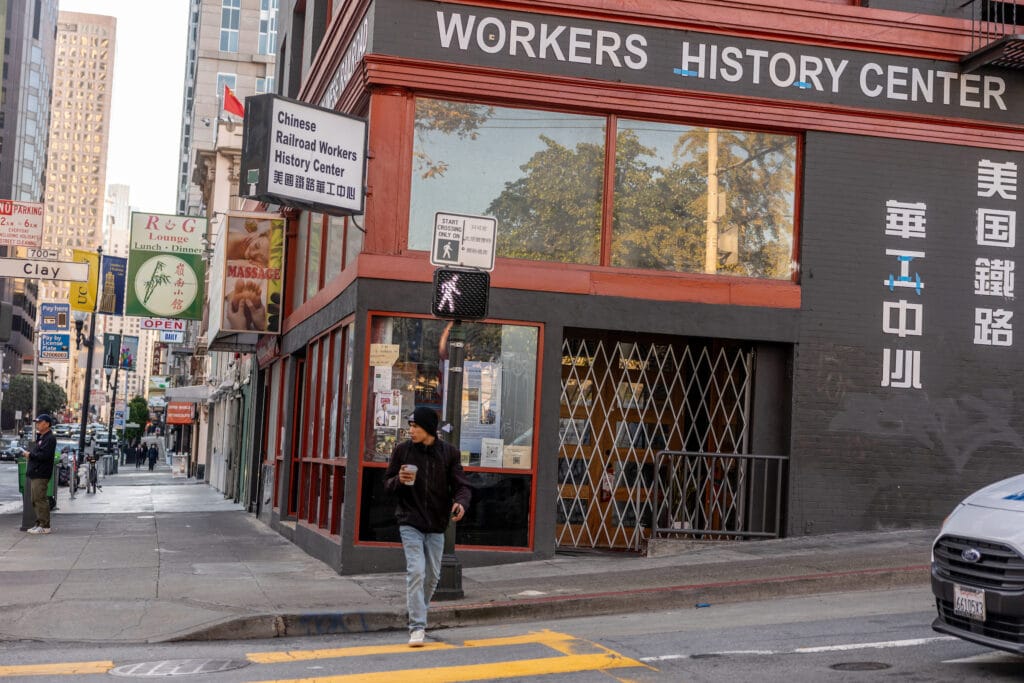
Chinatown, San Francisco street crossing

A Complete Guide to Workplace Leave Laws in California

From childbirth and medical leave to jury duty and caring for sick family members, employees need to take time off work for many different reasons. But employers aren’t always supportive. Fortunately, federal and California laws protect important employee leave rights. This guide explains key job-protected leave rights available to California workers.

A Complete Guide to Workplace Leave Laws in California Read More

Court of Appeal rules order deeming arbitration waived was appealable: Arzate v. ACE American Insurance Company

In Arzate v. ACE American Insurance Company (2025) 108 Cal.App.5th 1191, the Court of Appeal held that a trial court’s order lifting an arbitration stay and finding the defendant had waived arbitration is immediately appealable. The court ruled such an order is the “functional equivalent” of an order denying a motion to compel and that under the parties’ agreement, Plaintiff was required to initiate arbitration.

This decision confirms a defendant’s right to appeal a post-stay waiver finding and clarifies that the burden of initiating arbitration remains a question of contractual interpretation.

Court of Appeal rules order deeming arbitration waived was appealable: Arzate v. ACE American Insurance Company Read More

Busy street crossing, Chinatown San Francisco

Bonus Pay and Commission Laws in California: A Complete Guide

Disputes over bonus and commission pay are common. In particular, employers sometimes refuse to pay bonuses or commissions rightfully earned by employees. It’s crucial to understand your rights. You need to know how to respond if your employer illegally withholds this pay. This guide explains California’s rules for bonus and commission payments, and what to do if your employer isn’t paying you what you’ve earned.

Bonus Pay and Commission Laws in California: A Complete Guide Read More

Court of Appeal clarifies common law employment test in context of CalPERS rules: Sandhu v. Bd. of Admin. of CalPERS

In Sandhu v. Bd. of Admin. of CalPERS (2025) 108 Cal.App.5th 1048, the Court of Appeal held that a CalPERS retiree working for a private contractor was a common law employee of the public agencies he was assigned to, thus violating CalPERS post-retirement work rules. Applying the Borello “control of details” test, the court found a co-employment relationship.

This decision confirms that contractual language disclaiming an employment relationship is immaterial and that courts will look past such formalities to the realities of control when determining co-employment status in the CalPERS context.

Court of Appeal clarifies common law employment test in context of CalPERS rules: Sandhu v. Bd. of Admin. of CalPERS Read More

Outdoor grocer in Mission District, San Francisco CA

California PAGA Claims: A Complete Guide for Employees

California has a unique labor law: the Labor Code Private Attorneys General Act. PAGA allows workers to act as private attorneys general. What does this mean? Employees can sue their employers directly on behalf of themselves, other affected employees, and the State of California. This article will help you figure out if filing a PAGA claim is the right choice for your situation.

California PAGA Claims: A Complete Guide for Employees Read More

Court of Appeal addresses conscionability of arbitration agreements incorporating JAMS rules: Vo v. Technology Credit Union

In Vo v. Technology Credit Union (2025) 108 Cal.App.5th 632, the Court of Appeal held that an arbitration agreement incorporating JAMS rules is not substantively unconscionable on the basis of discovery limitations, because JAMS Rule 17(b) provides the arbitrator with authority to order non-party discovery.

The court reversed the denial of a motion to compel arbitration and expressly disapproved the contrary holding in Aixtron, Inc. v. Veeco Instruments Inc. (2020) 52 Cal.App.5th 360, holding that it was based on an impermissible assumption that third parties might refuse an arbitrator’s discovery order.

Court of Appeal addresses conscionability of arbitration agreements incorporating JAMS rules: Vo v. Technology Credit Union Read More

Low aerial view of Richmond District in San Francisco, CA

How to Deal With Workplace Harassment in California

If you’re facing workplace harassment, you’re likely wondering what steps you can take. This guide aims to help you understand your legal rights and choices under California law. We’ll start with a clear explanation of key laws. Then, we’ll discuss when your employer might be responsible for harassing behavior and what your legal options are.

How to Deal With Workplace Harassment in California Read More

Court of Appeal holds EFAA preempts conflicting state arbitration law: Casey v. Superior Court (D.R. Horton Inc.)

In Casey v. Superior Court (D.R. Horton Inc.) (2025) 108 Cal.App.5th 575, the Court of Appeal held that the federal EFAA preempts conflicting state law that would otherwise compel arbitration of sexual harassment claims, even if the parties’ agreement contains a state law choice-of-law provision. The court found that because the dispute involved interstate commerce, the EFAA applies and cannot be sidestepped by a contractual choice-of-law clause. The court also held that the EFAA renders the arbitration agreement unenforceable as to all of the plaintiff’s claims, not just the sexual harassment count.

This decision confirms that the EFAA provides a powerful bar to arbitration for an entire case, overriding contractual attempts to select state law.

Court of Appeal holds EFAA preempts conflicting state arbitration law: Casey v. Superior Court (D.R. Horton Inc.) Read More

Court of Appeal holds indemnity allowed for arbitration awards under Lab. Code § 1781: Nabors Corporate Services, Inc. v. City of Long Beach

In Nabors Corporate Services, Inc. v. City of Long Beach (2025) 108 Cal.App.5th 540, the Court of Appeal held that a subcontractor may seek indemnity under Labor Code § 1781 from a higher-tiered contractor for prevailing wage violations, even when the underlying wage claims were resolved via an arbitration award.

The court reasoned that a confirmed arbitration award has the same force and effect as a court judgment for the purposes of the statute. However, the court also affirmed that Labor Code § 1784, which creates different indemnity rights, does not apply retroactively to conduct that occurred before its 2022 enactment.

Court of Appeal holds indemnity allowed for arbitration awards under Lab. Code § 1781: Nabors Corporate Services, Inc. v. City of Long Beach Read More

Street-level view of Mission District, San Francisco with New Mission sign

The Complete Guide to California Workplace Discrimination Laws

Workplace discrimination impacts employees at all levels, from entry-level positions to senior management.  Most people know that discrimination is illegal. However, employees may not fully understand their rights. Employers may not fully recognize their responsibilities. This article aims to clarify what counts as discrimination, and what you can do to protect your rights.

The Complete Guide to California Workplace Discrimination Laws Read More

Court of Appeal clarifies limits on tort damages in wrongful termination cases: Hearn v. Pacific Gas & Electric Co.

In Hearn v. Pacific Gas & Electric Co. (2025) 108 Cal.App.5th 301, the Court of Appeal held that a plaintiff cannot recover in tort for conduct that is inherently part of the termination process, such as an internal investigation report, if the alleged harm is the same as the harm from the termination itself. Reversing a defamation judgment, ruling that an independent tort claim requires proof of separate conduct and separate damages (e.g., reputational harm) not resulting solely from the job loss.

This decision strongly reinforces that plaintiffs cannot “plead around” wrongful termination law to recover tort damages without proving a truly independent wrong.

Court of Appeal clarifies limits on tort damages in wrongful termination cases: Hearn v. Pacific Gas & Electric Co. Read More

Court of Appeal upholds amended apprenticeship regulations for public works: Associated General Contractors v. Dept. of Industrial Relations

In Associated General Contractors v. Dept. of Industrial Relations (2025) 108 Cal.App.5th 243, the Court of Appeal upheld new apprenticeship regulations (8 CCR § 202 et seq.) that require apprentices on public works projects to perform only work within their specific, approved training programs. The court affirmed this was a valid exercise of the California Apprenticeship Council’s authority and, in doing so, expressly disapproved the holding in Henson v. C. Overaa & Co. (2015) 238 Cal.App.4th 184, which had previously defined an apprentice’s trade more broadly by the work of journeymen.

This decision solidifies the agency’s power to strictly define and limit the tasks apprentices can perform on public works jobs.

Court of Appeal upholds amended apprenticeship regulations for public works: Associated General Contractors v. Dept. of Industrial Relations Read More

Court of Appeal allows fees and costs for wage and hour plaintiffs who first pursue Berman hearings: Villalva v. Bombardier Mass Transit Corp.

In Villalva v. Bombardier Mass Transit Corp. (2025) 108 Cal.App.5th 211, the Court of Appeal held that a wage and hour plaintiff who loses their claim at a Berman hearing but subsequently prevails in a trial de novo is entitled to attorney’s fees and costs under Labor Code §§ 218.5, 226, and 119. It ruled that the trial de novo is an independent “action,” not merely an appeal governed by the fee-shifting limits of § 98.2 (c).

This decision confirms that employees do not forfeit their statutory right to attorney’s fees by first pursuing, and even losing, an informal Berman hearing.

Court of Appeal allows fees and costs for wage and hour plaintiffs who first pursue Berman hearings: Villalva v. Bombardier Mass Transit Corp. Read More

Busy Chinatown, San Francisco street scene

A Guide to California’s Labor Laws about Rest and Meal Breaks

In this article, we’ll explain who is entitled to meal and rest breaks in California. We’ll also help you determine break time amounts based on your shift length. Finally, we’ll cover key rules defining what makes breaks legally compliant or non-compliant and help you figure out what to do if your employer is illegally denying rest and meal breaks.

A Guide to California’s Labor Laws about Rest and Meal Breaks Read More

U.S. Supreme Court holds preponderance standard applicable to FLSA exemptions: E.M.D. Sales, Inc. v. Carrera

In E.M.D. Sales, Inc. v. Carrera (2025) 604 U.S. 45, the U.S. Supreme Court unanimously held that an employer must prove an employee qualifies for an FLSA exemption by a preponderance of the evidence, rejecting the Fourth Circuit’s heightened “clear and convincing” standard. The Court affirmed that preponderance is the default civil standard and found no reason to apply an exception, noting the FLSA is silent on the issue and that even Title VII claims do not require a heightened burden.

This decision resolves a circuit split and clarifies that employers do not face an elevated evidentiary bar when asserting FLSA exemptions.

U.S. Supreme Court holds preponderance standard applicable to FLSA exemptions: E.M.D. Sales, Inc. v. Carrera Read More

Street scene Mission District, San Francisco CA

Wrongful Termination in California: What to Know and How to Respond

Employers in California and throughout the United States have a lot of leeway to fire workers with and without cause. Nonetheless, numerous federal and California state laws protect employees from being wrongfully terminated. We’re here to help you understand your rights and options. We’ll help walk you through what you need to know to make sense of your situation.

Wrongful Termination in California: What to Know and How to Respond Read More

Court of Appeal holds PAGA actions necessarily include individual claims subject to arbitration: Leeper v. Shipt, Inc.

In Leeper v. Shipt, Inc. (2024) 107 Cal.App.5th 1001, the Court of Appeal held that all PAGA actions necessarily include an “individual claim” subject to arbitration, even if the plaintiff only pleads a representative action. Reversing the denial of a motion to compel, the court held that Labor Code § 2699 (a) inherently bundles an individual claim within any PAGA suit.

This ruling revives a key defense argument that PAGA claims are inherently divisible for arbitration, teeing up the issue for Supreme Court review.

Court of Appeal holds PAGA actions necessarily include individual claims subject to arbitration: Leeper v. Shipt, Inc. Read More

Ninth Circuit extends ministerial exception to kosher supervisor in commercial setting: Markel v. Union of Orthodox Jewish Congregations of America

In Markel v. Union of Orthodox Jewish Congregations of America (9th Cir. 2024) 124 F.4th 796, the Ninth Circuit held that the ministerial exception bars unpaid overtime (FLSA) and fraud claims brought by a mashgiach (kosher supervisor) against a kosher certifying organization. Applying the functional test from Hosanna-Tabor and Our Lady of Guadalupe, the court found the defendant was a religious institution despite its commercial activities and the plaintiff was a minister because he performed “vital religious duties.”

This decision expands the ministerial exception’s reach into commercial/regulatory religious roles and confirms it bars wage-related claims.

Ninth Circuit extends ministerial exception to kosher supervisor in commercial setting: Markel v. Union of Orthodox Jewish Congregations of America Read More

Court of Appeal confirms retroactivity of attorney fee statute for pending case: Winston v. County of Los Angeles

In Winston v. County of Los Angeles (2024) 107 Cal.App.5th 402, the Court of Appeal held that Labor Code § 1102.5(j)’s attorney fee provision applies retroactively to cases that were pending when the statute was enacted. The court affirmed the long-standing rule that fee-shifting statutes are procedural and apply to active litigation absent clear legislative intent to the contrary.

This decision confirms that plaintiffs in pending whistleblower cases can recover fees under § 1102.5(j), even if their case was filed before the fee provision existed.

Court of Appeal confirms retroactivity of attorney fee statute for pending case: Winston v. County of Los Angeles Read More

Court of Appeal holds Labor Code trumps CCP § 998 cost recovery for defendants: Chavez v. California Collision

In Chavez v. California Collision (2024) 107 Cal.App.5th 298, the Court of Appeal held that a defendant in a wage and hour action cannot recover costs under Code of Civil Procedure § 998. Following Cruz v. Fusion Buffet, Inc. (2020) 57 Cal.App.5th 221, the court held that the specific, one-way cost-shifting provisions of Labor Code §§ 1194 and 218.5 displace the general, two-way framework of § 998.

This decision solidifies that employers are barred from recovering § 998 costs in wage actions, preserving the Labor Code’s policy of protecting plaintiffs from cost-shifting penalties unless their claim was brought in bad faith.

Court of Appeal holds Labor Code trumps CCP § 998 cost recovery for defendants: Chavez v. California Collision Read More

Court of Appeal affirms McDonnell Douglas framework inapplicable to non-discrimination claims: Quesada v. County of Los Angeles

In Quesada v. County of Los Angeles (2024) 106 Cal.App.5th 880, the Court of Appeal held that the McDonnell Douglas burden-shifting framework does not apply to non-discrimination claims, such as a public employee’s writ of mandate proceeding alleging a promotion was denied based on a time-barred investigation. The court affirmed the denial of the writ, rejecting the plaintiff’s argument that evidentiary difficulties (like confidentiality agreements) justified borrowing the framework.

This decision confirms that the McDonnell Douglas test is limited to discrimination cases and cannot be used by plaintiffs in other employment disputes to ease their burden of proof.

Court of Appeal affirms McDonnell Douglas framework inapplicable to non-discrimination claims: Quesada v. County of Los Angeles Read More

Court of Appeal clarifies evidentiary standards for FEHA plaintiffs to defeat summary adjudication: Wawrzenski v. United Airlines

In Wawrzenski v. United Airlines (2024) 106 Cal.App.5th 663, the Court of Appeal reversed summary judgment on FEHA claims, holding that the trial court applied too high an evidentiary standard. The court clarified that comparator evidence need only be “similar in all relevant respects,” not identical, and that evidence of pretext—such as a failure to investigate the plaintiff’s internal complaints—must be properly considered.

This decision lowers the evidentiary bar for FEHA plaintiffs at the summary judgment stage by confirming that courts must broadly evaluate pretext and cannot reject comparator evidence based on minor differences.

Court of Appeal clarifies evidentiary standards for FEHA plaintiffs to defeat summary adjudication: Wawrzenski v. United Airlines Read More

Court of Appeal addresses preclusive effect of arbitration on PAGA standing: Rodriguez v. Lawrence Equipment, Inc.

In Rodriguez v. Lawrence Equipment, Inc. (2024) 106 Cal.App.5th 645, the Court of Appeal held that an arbitrator’s final ruling against a plaintiff on their individual Labor Code claims can preclude that plaintiff’s standing to pursue a subsequent PAGA claim based on the same alleged violations. Applying the doctrine of issue preclusion, the court reasoned that if the arbitrator necessarily decided the plaintiff was not an “aggrieved employee” (i.e., suffered no violation), the plaintiff loses the necessary standing to represent the state.

This decision confirms that the procedural separation of PAGA claims does not bar the preclusive effect of an adverse arbitration award, making the outcome of the individual arbitration determinative of PAGA standing.

Court of Appeal addresses preclusive effect of arbitration on PAGA standing: Rodriguez v. Lawrence Equipment, Inc. Read More

Court of Appeal rules on remedies for Skelly violations and COVID-19 ordinance noncompliance: Bedard v. City of Los Angeles

In Bedard v. City of Los Angeles (2024) 106 Cal.App.5th 442, the Court of Appeal affirmed the termination of a police officer for refusing to comply with a city’s COVID-19 vaccination ordinance, holding that a violation of Skelly rights does not automatically require reinstatement when the underlying conduct justifies the termination.

The decision confirms that the remedy for a pre-termination due process (Skelly) violation is typically back pay only for the period of the delay, not reversal of the termination itself. This reinforces a clear distinction between procedural defects and the substantive validity of public employee discipline.

Court of Appeal rules on remedies for Skelly violations and COVID-19 ordinance noncompliance: Bedard v. City of Los Angeles Read More

Court of Appeal upholds contractual deference to MOU in public employment dispute: Ramirez v. City of Indio

In Ramirez v. City of Indio (2024) 105 Cal.App.5th 939, the Court of Appeal affirmed the termination of a public employee despite a favorable arbitral recommendation, holding that the Memorandum of Understanding (MOU) granted the city manager final, non-deferential authority over the termination decision.

This decision reinforces that the explicit terms of an MOU control the disciplinary process for public employees, even when they conflict with an arbitrator’s findings.

Court of Appeal upholds contractual deference to MOU in public employment dispute: Ramirez v. City of Indio Read More

Court of Appeal holds MOUs may not bar contract claims for public employee wages: Bath v. State of California

In Bath v. State of California (2024) 105 Cal.App.5th 1184, the Court of Appeal held that a public employee’s right to compensation for work already performed matures into an independent contractual right that can be pursued as a breach of contract claim, even if the relevant Memorandum of Understanding (MOU) might bar parallel Labor Code claims.

This decision provides public employees with an independent, contract-based cause of action for unpaid wages that bypasses common statutory defenses like the Portal-to-Portal Act at the pleading stage.

Court of Appeal holds MOUs may not bar contract claims for public employee wages: Bath v. State of California Read More

Court of Appeal holds EFAA application precludes arbitration for all claims: Liu v. Miniso Depot CA, Inc.

In Liu v. Miniso Depot CA, Inc. (2024) 105 Cal.App.5th 791, the Court of Appeal held that when a plaintiff asserts at least one sexual harassment claim governed by the Ending Forced Arbitration of Sexual Assault and Sexual Harassment Act of 2021 (EFAA), the entire action is rendered non-arbitrable. The court affirmed the denial of a motion to compel, finding that the EFAA’s language precludes arbitration of all associated claims.

This decision significantly expands the EFAA’s impact in mixed-claim lawsuits by preventing the severance and arbitration of non-sexual harassment claims.

Court of Appeal holds EFAA application precludes arbitration for all claims: Liu v. Miniso Depot CA, Inc. Read More

Court of Appeal rules on Information Practices Act protections: Wentworth v. Regents of the University of California

In Wentworth v. Regents of the University of California (2024) 105 Cal.App.5th 580, the Court of Appeal issued a key ruling on the Information Practices Act (IPA) (Civ. Code § 1798 et seq.), holding that personal information need not be “confidential” or “private” to be protected from unauthorized disclosure by a state agency. The court reversed the dismissal of the plaintiff’s invasion of privacy claim, clarifying that the IPA broadly protects records that are “linked to” an individual, regardless of their confidential status.

This decision expands the scope of the IPA, exposing state agencies to liability for the improper disclosure of a wider range of employee information.

Court of Appeal rules on Information Practices Act protections: Wentworth v. Regents of the University of California Read More

Ninth Circuit rejects heightened notice requirement for compliance officers in FCA retaliation claims: Mooney v. Fife

In Mooney v. Fife (9th Cir. 2024) 118 F.4th 1081, the Ninth Circuit reversed the dismissal of a False Claims Act (FCA) retaliation claim, holding that the McDonnell Douglas framework applies, and explicitly rejecting a heightened notice standard for compliance officers or employees whose job involves reporting misconduct. The court affirmed that the employee satisfied the FCA’s notice requirement and engaged in protected activity by reporting potential violations.

This decision simplifies the path for compliance officers to bring retaliation claims by confirming they are subject to the same standard of proof as other employees.

Ninth Circuit rejects heightened notice requirement for compliance officers in FCA retaliation claims: Mooney v. Fife Read More

Scroll to Top